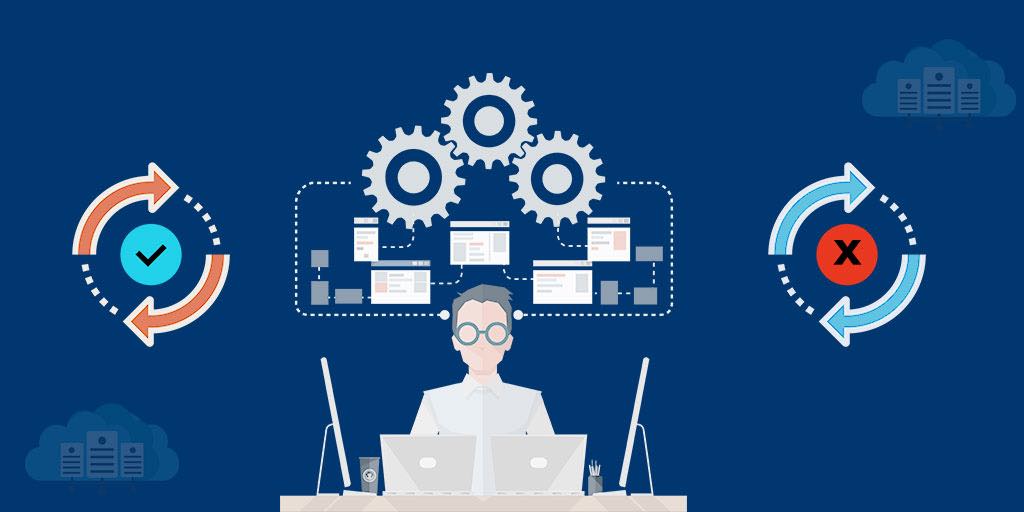
Is testing a waste of time or a necessary step in ensuring a system performance? Many times projects don’t want to pay additional revenue for testing services that may only confirm that the software works as expected with no critical flaws. You’ve hired executives and higher developers with a lot of experience including a strong CV, you’ve paid them a lot of money to get high-quality results. There are no bugs or glitches. The code is clear and functional. Why should you spend extra money on a QA team to check the work of your coding experts? Isn’t it a valid question?
- What if your project budget allows you to hire only developers whose experience and skills raise a few concerns?
- Your QA team will compensate for the lack of required knowledge.
- Will you consider software testing to be an essential prerequisite in this scenario?
Yes, most likely, because testers can reveal serious system bugs that may prevent the product from functioning properly. Running checks, as critical as code reviews are, is another way to ensure that the highest quality software is delivered, free of bugs and inconsistencies.
Manual or Automated
The testing itself can be carried out manually by individuals or automated by various tools. There is a fair amount of disputes on the topic of which one is better.
Eventually, it will depend on the task at hand and the industry to decide which method is more suitable. Automation may at first take longer to set up, but it can save a lot of time and money in the long run.
Frankly, it’s important to have skills in either area. To ensure that the product is of the highest level of quality manual testing could be a safer and budgeted option. The extremely essential exploratory testing is very often carried out by the manual testes. This type of testing can’t be replicated by automation once the application is stable.
Testers are responsible for finding and identifying issues that could impact the software work. This is an especially important task before the application is released, at the last stages of development. If any of the features fails during testing, it needs to be reworked, and then retested. Ultimately, when the issues are identified, testers and developers work to get them fixed, and then the process of testing is repeated along with key critical scenarios to ensure that the issue is resolved and no existing functionality is broken
Consequence
Almost everyone has heard of the Butterfly effect and theory. In other words, a butterfly that flies in one corner of the globe may cause a tornado in the opposite corner. If you make a minor change to your application’s user interface or make a minor change to the code, you may break the entire system. Here is another example, a misunderstanding of the customer’s requirements or misconceptions at the stage of analyzing the market results in a faulty interpretation of the data, a reduction in code quality, and improper operation of the finished software. A minor misunderstanding makes its way through the stages of analysis, development, and testing. It can sometimes result in huge losses and even the failure of a business. These are some examples of the Butterfly Effect in Software.
Similar to the Butterfly Effect, there is the Domino Effect in software development and testing. The mechanism is the same – you change something, for example, in the system requirements. This change causes similar changes to occur nearby and everything occurs in a logical sequence. In comparison to the Butterfly Effect, the Domino Effect is more scalable. However, they both have an impact on the final return on investment and are a nightmare for every customer, developer, tester, and project manager. Remember the proverb, “garbage in, garbage out” to avoid the Domino Effect.
Some people believe that testing activities are too costly. However, they might be certain that testing has a negative impact on the quality of the final product. When developing a simple mobile application or when one is sure that users will not use it widely or software developers are able to test E2E, I completely agree that testing can be a wastage of resources time, and efforts. However, if you are developing a solution for the healthcare, e-commerce, or banking industries, testing can protect you from irritated users, financial losses, reputation damage, and even a court of law.
Why is it important to test software?
The testing is important since it discovers defects or bugs before the delivery to the client, which guarantees the quality of the software. It makes the software more reliable and easy to use. Thoroughly tested software ensures reliable and high-performance software operation.
The output of your solution is entirely dependent on the number of people who use it. The greater the number of users, the greater the benefit. However, the greater the number of users your app has, the more complaints you can get in the event of a bug.
- A media controversy happens when a mistake affects fewer than 1% of all Google. I am sure you must have heard about on August 23, 2017, the users were unable to launch Facebook.
- Software update for the Nest ‘smart’ thermostat (owned by Google) went wrong and literally left users in the cold. When the software update went wrong, it forced the device’s batteries to drain out, which led to drop in the temperature. Consequently, the customers were unable to heat their homes or use any amenities.
- During a routine device refresh, Starbucks encountered a software problem. About 135,000 stores were unable to fulfill orders. Many people went without a cup of delicious coffee due to a minor software bug.
- Due to an internal technical problem at the New York Stock Exchange, all open orders were canceled. For four hours, the stock traded was unavailable.
- There are hundreds of such examples where a software error has harmed the credibility of reputable sources and well-known corporations.
Are you still convinced that testing is an area where you can cut corners?
How much testing is extreme?
Investing in a large amount of software testing can be difficult to justify. For every line of written software, an organization should invest at least 50% of software development time and the number of lines of code to test the created software. With the constant pressure, it’s easy to skip on the amount of testing in order to launch sooner. But it can all be done at the expense of software quality. Bugs give users a bad experience with your services and it can significantly damage the brand image.
Having a high-quality product is beneficial and the commitment to this goal should be throughout the whole process. It’s wise to invest in good resources: tests, tools, and people. Providing the team with proper tools to uphold the quality of testing might be a good idea that will give great results.
Conclusion
As you can see, testing is very important and sometimes even crucial if your goal is to deliver a good product with high quality and less possibility to fail when being used, especially after its release. Testing provides an assessment of the product performance and it should always be conducted properly, whether it is manual or automatic.
TestDel has worked with some of the world’s most creative and forward-thinking organizations/brands in a variety of industries. For more than 5 years, businesses around the world have relied on TestDel’s independent software testing services and experience to achieve faster time to market, higher returns on investments (ROI), and improved efficiency in their overall QA initiatives. Connect with our experts to improve the pace and agility of your QA processes with the most cutting-edge research concepts