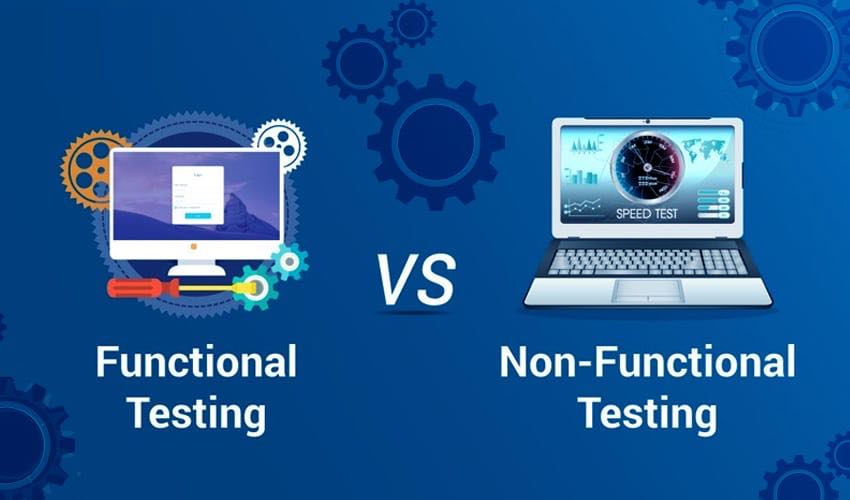
Testing is a vital part and success element of the software lifecycle process. If the quality assurance is carried out correctly, verification can support to avoid software errors and safeguard a high quality of the software. There are a lot of testing exercises to make sure the application works correctly and can be migrated easily across multiple environments and platforms. These techniques are usually divided into functional and non-functional tests.
What is the difference between Functional and non-functional testing?
Functional testing is a sort of testing that emphasizes on the business usability of the software product. The focal idea behind functional testing is to assure that each functionality of software works as specified in the functional requirement documents (FRD). These sorts of tests emphasis only on checking the outcomes of processes, bypassing the intermediary states of the system during test execution. Functional tests primarily involve black box testing practices, where tester don’t compeer into internal code configuration and rely primarily on specifications.
Non-functional testing is a QA procedure that emphasizes on the assessment of the non-functional features of the system. It verifies the factors that are not tested in functional tests, for example performance, usability, reliability, etc. Non-functional tests are as imperative as functional tests as they support to understand how the system works. The main objective of this type of testing is to provide the best practice to the end-users of the software product.
FUNCTIONAL TESTING TYPES
Since functional testing is to test each function of the software application, by providing appropriate input, verifying the output against the Functional requirements. Common functional tests include:
- Unit testing is the first phase of testing which is typically executed by developers. This procedure confirms that individual components of a software are functional at the code level and respond as expected.
- Integration tests are designed to establish if independently developed components of software work appropriately when they are coupled to each other. Integration tests confirm that communication between diverse units runs efficiently. Those tests try to disclose distinctive sorts of errors such as inconsistencies in the message or data formats as well as invalid input or output constraints that can suddenly shut down a function.
- System testing is a black-box testing performed on a complete integrated system to evaluate the compliance of the system with the corresponding requirements. This type of testing is usually performed by a test team other than the development team before the product goes into production.
- User Acceptance Testing (UAT), occasionally called application testing, is often the last phase of the functional testing which is performed before the application goes live. The objective of this phase is to ensure that the software is ready for the delivery and meets the end user’s requirements. This, in turn, requires the product to be tested like a day in real-life
NON-FUNCTIONAL TESTING TYPES
The non-functional tests are an efficient increment to the functional tests as they deliver important information on the reliability safety and serviceability of the system. This type of testing checks how the software product works and includes (but is not limited to) the following types:
- Reliability tests verify if the software can sustain a certain performance level under certain situations over a period of time.
- Robustness tests are meant to prove that the system works appropriately under all conditions, even during unanticipated events.
- Stress tests monitor the system performance a heavy load.
- Performance tests are executed to determine how the software works in terms of responsiveness and processing speed under a workload. The purpose of Performance Testing is not to find functional defects but to eliminate performance bottlenecks in the software or device.
- Load tests are the tests that are used to evaluate the behaviour of the system under a specific load. This testing type defines the maximum load for your system and as a result, you’ll have a clear understanding of whether your target will be able to reach your service or not.
- Usability tests are designed to verify if the software product can be easily used by end-users.
- Maintainability tests are conducted to assess the software’s ability to meet the users’ requirements and be changed without any issues.
- Portability tests are the process of determining the degree of ease or difficulty to which a software component or application can be effectively and efficiently transferred from one hardware, software or other operational or usage environment to another.
DIFFERENCE BETWEEN FUNCTIONAL TESTING VS NON-FUNCTIONAL TESTING
Functional and non-functional testing in the application lifecycle is designed to assure that application or software is fit for purpose. The core difference between functional and non- functional tests is that functional testing is run to certify that the software meets the particular requirements, while non-functional testing is focused on how well the system works. This is best explained by the following example. Under functional testing, you can verify if the login functionality works as intended. For example, you can check if inputting the username and the password allows you to log into the account on the website. And with the help of non- functional tests, you verify if by inserting the same data you can log in to your account within 2-3 seconds. Checking how many users can log into simultaneously is another example of non-functional testing.
Furthermore, functional testing is frequently expected at identifying and eliminating issues in the software so it can meet the business requirements seamlessly. At the same time, non- functional testing is concerned with the user experience and behaviour but not with “defect hunting”.
The next difference refers to the standards on which functional testing and non-functional testing are based. Under functional tests, both valid and invalid operations are executed in order to test the behaviour of the software both in desired and unexpected conditions. On the other hand, while running non-functional tests you need to consider the parameters that are not considered while performing the positive and negative functional tests. There is one more distinction between the two types of tests – the functional tests are performed before the non- functional tests.