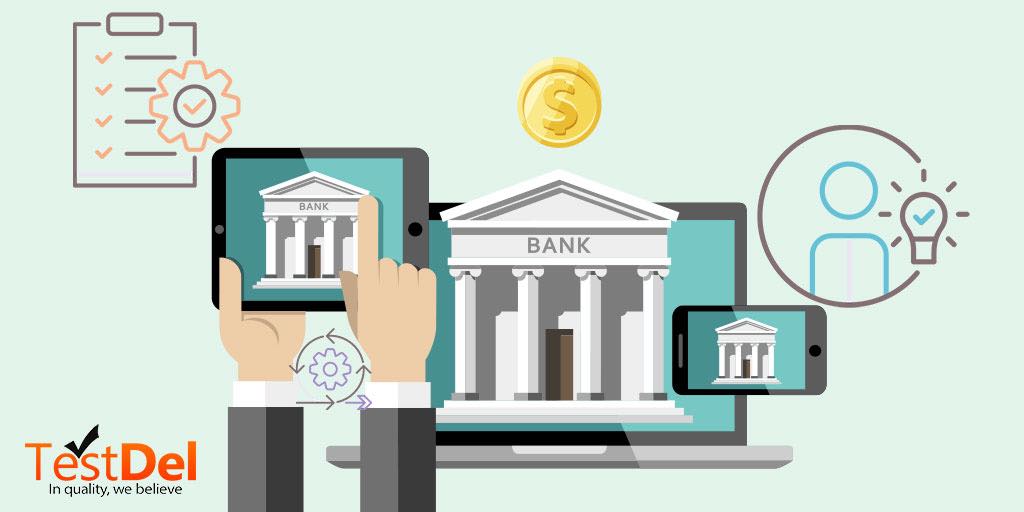
Due to technology improvements and digitalization, the financial services industry is undergoing a considerable upheaval. The banking industry is heavily reliant on technology-enabled goods, with a critical need for dependable and high-performing solutions to provide a positive client experience. Furthermore, all activities done by banking software must execute efficiently and without errors in order to guarantee safe and secure transactions. Because banking apps handle millions of transactions, having high-performing apps is crucial.
Banking apps must be capable of delivering safe and secure transactions, which necessitates thorough end-to-end software testing of their systems. Furthermore, because banking software applications are complex and have numerous dependencies, the testing process takes longer and requires a thorough grasp of the scope.
There are many programs available now that can help you fine-tune your financial goals. However, not all of them can provide the highest level of security and dependability. As a result, customers frequently switch to other banking and financial advisors or stop using such apps altogether. We looked into this issue in greater depth in this article. More crucially, we identified quality requirements for financial planners and demonstrated a viable testing strategy.
1. What do users expect from financial planning and banking apps
Many individuals wish to keep track of their finances on a regular basis, but only a few are successful. The explanation is simple: it’s difficult to develop the habit of keeping track of all financial transactions in one spot. You can use a notepad today, Excel tomorrow, or simply notes on your phone. Mobile applications claim to solve this problem, but users frequently complain about the inconvenient nature of the programs, even when they are paid subscriptions. Customer service is closely tied to the success of banking apps and financial advisers. Budgeting, saving, investing, debt repayment, and other financial procedures are all covered by financial planners. Users want not only actual information about how much they may spend on products but also transaction dependability and comprehensive security when performing any of these jobs.
2. Why are Financial Planning and Banking Applications being tested
All banking and financial applications, for the most part, share identical features. They operate on the basis of habit trackers. Through their assistance, you can keep track of your income and costs, as well as discover what the majority of them are spent on and where you may save money. Programs keep track of purchases and display the dynamics of costs using diagrams, graphs, and lists. There are a variety of factors that cause a user to change from one financial planning program to another, including inaccurate numbers, a difficult interface, and a limited number of cost items. As a result, product owners and developers should focus on quality in order to get things in order and maximize ROI. Software testing is an important part of this, so let’s figure out how to do it right.
3. Steps to Successful Financial Planner Testing
To ensure that banking and financial applications are tested thoroughly, an end-to-end testing methodology using several software testing strategies is required:
- Total coverage of all banking workflows and business requirements
- The functional part of the application
- The security
- User Experience
- Performance
- Data Integrity
To properly assess banking applications and financial planners, one must consider the order in which the following steps should be completed:
3.1. Requirement Analysis
Quality testing for banking applications, like any other type of testing, should start with gathering all of the requirements. At this point, it’s critical to consider all aspects of the program, including its aim and the whole list of activities it’s supposed to complete.
3.2. Database Testing
The QA engineers need to check the optimum set of processes linked to the database because financial planners save a lot of information. It’s required to verify data integrity, loading, transfer, stored procedure, and function checks, among other things.
3.3. Integration Testing
The integration of application modules, their connection with one another, and the integration of subsystems into a single system are the key points to consider.
3.4. Functional Testing
The QA engineer prepares, validates, and executes test cases at this step.
3.5. Security Testing
In order to penetrate the system and detect it before any unauthorized people can access it, the QA team must include both negative and positive test scenarios in their testing preparation.
3.6. Usability Testing
This form of testing is required to verify that consumers of various abilities can use the system in the same way that a regular user can.
3.7. User Acceptance Testing
This is the last stage of end-user testing to ensure that the application corresponds to the real situation.
4. Final Thoughts
With a dynamic testing methodology and appropriate risk management, the productivity and resilience of financial planning and banking applications may be improved. Due to the broader extent and impact of the applications in the economic sphere, it is unquestionably a hard space.
Several features must be present in a standard banking application:
- Support for many user sessions at the same time;
- Perfect connection with other apps (bill payment, credit cards, debit cards );
- Transaction processing that is both quick and secure;
- Support to users for a variety of systems (Mac, Linux, Unix, Windows);
- Support users from all over the world;
- Support for a variety of payment methods (VISA, MasterCard)
Testing is essential for financial planners to meet all of the following requirements.
Conclusion
Banking applications must undergo extensive testing because they handle vast amounts of confidential data. An error-prone programme puts banking system users at risk and puts their financial assets at risk.
A business owner may assure that users will be able to freely conduct transactions and monitor the status of a deposit or their account balance by conducting testing.
TestDel is the place to go if you’re seeking for high-quality testing services. We have a thorough understanding of the banking sector and are conversant with the current fintech industry standards, thanks to our over ten years of expertise.
TestDel’s qa testing services assist organizations and creative business initiatives in focusing on Quality Assurance and Testing parts of the delivery lifecycle – employees, technologies, and infrastructures. Connect with us to improve your QA procedures and develop the best testing plan for your complex and mission-critical applications.
Take a look at our services to see which ones might be beneficial to your project. Contact us to describe your software and learn more about how to test and improve its performance.