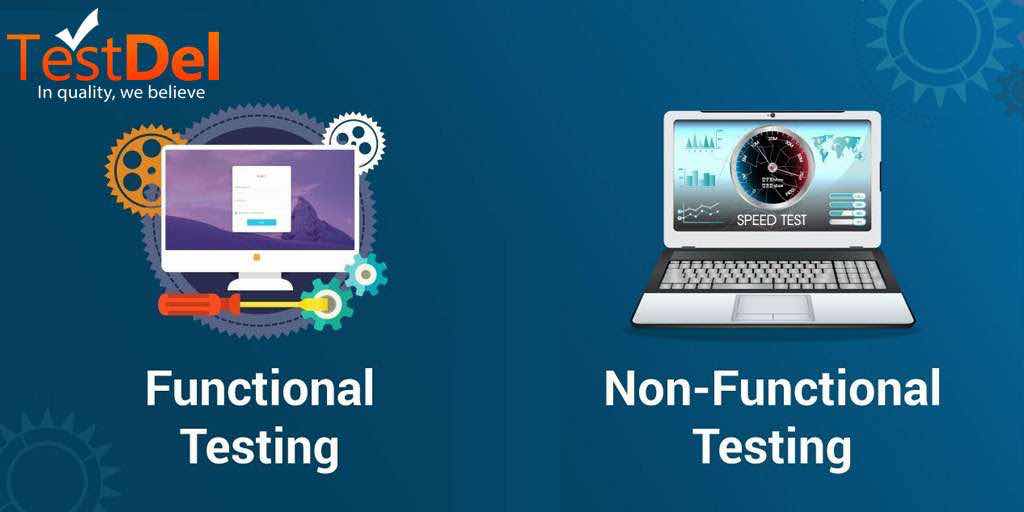
In the software industry, testing is a buzzword. With the rise of agile testing and DevOps, the software testing industry is predicted to increase at a 14% CAGR over the next five years. This part of the process is critical to the entire software. The system must be tested on a regular basis to ensure that it completes the process without errors. Testing is an important aspect of the software development process and a key success element. Tests can help to eliminate software problems and assure a high-quality output if test management is done effectively. There are numerous testing procedures to ensure that your solution functions properly and can be used across a variety of contexts and platforms. These techniques are usually divided into two categories, i.e. functional testing and non-functional testing.
1. What are Functional Testing and Non-Functional Testing?
1.1. Functional Testing
Functional testing is a kind of testing that ensures that each function of a software program works as expected according to the requirements. This testing mostly consists of black-box testing, and it is unconcerned with the application’s source code. The key goal is to guarantee that each software feature functions as expected according to the requirements. These tests are solely concerned with verifying the outcomes of operations, totally ignoring the system’s intermediate states throughout execution. This testing involves checking of User Interface, APIs, Database, security, client-server applications, and functionality of the Application Under Test. The testing can be done either manually or using automation.
1.2. Non-Functional Testing
Non-functional testing is a type of testing that focuses on evaluating the system’s non-functional characteristics. It examines characteristics like performance, usability, and dependability that aren’t assessed in functional tests. Non-functional tests are just as significant as functional tests in that they aid in understanding how the system operates. The major purpose of this form of testing is to deliver the best possible experience to the software product’s end customers. Testing how many individuals can simultaneously login into software is a nice example of a non-functional test.
Client satisfaction is affected by non-functional testing, which is just as important as functional testing.
2. Types of Functional Testing
Functional testing is performed as numerous sorts of functional tests since it is a process that checks multiple parameters of a software product. Let’s have a look at some of the most commonly utilized ones:
2.1. Unit Tests
Developers typically perform unit testing as the first level of testing. This procedure assures that individual software components are functional and behave as intended at the code level. Manually performing unit tests is possible, but automating the process shortens deployment timelines and increases test coverage.
2.2. System Tests
System testing is a type of black-box testing that analyses a whole software product. The goal of system tests is to ensure that the system meets the defined requirements. Before a product goes into production, a test team normally takes this type of testing separate from the development team.
2.3. User Acceptance Tests
User acceptance testing, often known as application testing, is the final stage of software functional testing that takes place before a product is delivered to the public. This procedure aims to guarantee that the software is ready for distribution and that it fits the needs of the end-users. As a result, the product must be tested in the real world — by end-users via the beta testing procedure.
2.4. Smoke Testing
Before fine-tuning other testing techniques, smoke testing is performed to ensure that the core functionality is working properly.
2.5. Sanity Testing
You must understand that when a bug has been repaired or new functionality has been implemented, there are no difficulties that have arisen as a result of the modification.
2.6. Integration Tests
Integration tests are used to see if independently produced software components function together properly when they’re joined. Integration tests ensure that communication between different units is smooth and error-free. These tests are designed to find various types of defects, such as a message or data format incompatibilities, as well as improper input or output parameters, which can cause a function to shut down unexpectedly.
3. Types of Non-Functional Testing
Non-functional tests are a good complement to functional tests because they provide vital information on the system’s safety, serviceability, and dependability. This sort of testing examines the functionality of a software product and covers (but is not limited to) the following types:
3.1. Compatibility Testing
This form of testing verifies how well the product works with other components such as the operating system, browsers, and hardware.
3.2. Reliability Tests
Reliability tests determine whether software can sustain a specified level of performance under specific situations for an extended length of time.
3.3. Performance Tests
Performance tests are used to see how the program performs under pressure in terms of responsiveness and processing speed.
3.4. Load Tests
Load Tests are the tests that are used to evaluate the behavior of the system under a specific load.
3.5. Maintainability Tests
Maintainability tests are performed to assess the software’s ability to satisfy the needs of users and to be modified without causing problems.
3.6. Usability Testing
Usability tests are designed to verify if the software product can be easily used by end-users.
3.7. Security Tests
Tests performed to uncover how vulnerable the system is to attacks, and how well data is protected
3.8. Portability Tests
The efficiency with which software may be transferred to a different environment, such as how readily mobile apps can be moved between operating systems or devices, is measured in portability tests.
4. What Is the Difference Between Functional and Non-functional Testing
Software testing, both functional and non-functional, is intended to ensure that the product meets the needs of the consumer. The primary distinction between functional and non-functional tests is that functional tests are performed to ensure that the software meets the specific requirements, whereas non-functional tests concentrate on how well the system operates. This example demonstrates this point; You can test if the login feature works as expected under functional testing types. For example, you can see if you can log into your account on the website by entering your username and password. You may also use non-functional testing to see if you can log in to your account in under 2 seconds by providing the same info.
Functional testing is frequently used to find and eliminate bugs in software so that it can perfectly match business requirements. Non-functional software testers, on the other hand, are more concerned with the user experience and behavior than with bug-hunting.
The other distinction concerns the criterion used in functional and non-functional testing. Valid and invalid operations are done in functional tests to ensure that the software behaves as expected and unexpectedly as possible. When performing non-functional software testing, on the other hand, you must examine the factors that are omitted while completing the positive and negative functional tests.
Functional quality assurance is all about obtaining a bug-free codebase suited to the corporate goals, whereas non-functional tests are a human-oriented kind of test intended at analyzing a software product in the views of its prospective customers.
4. Conclusion
You test the performance of your software product and ensure that it meets the highest quality requirements by using both functional and non-functional testing approaches. Do not leave the success of your digital product to chance; instead, contact TestDel, a professional QA firm with experience in both forms of testing. We’ll provide you advice on the greatest techniques and make sure that your app’s quality is excellent.