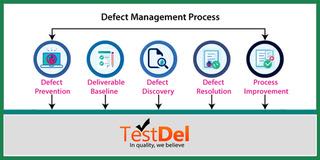
The process of monitoring logged defects and issues in a product from start to finish and creating new versions of the product that repair the defects is known as defect management.
Defect management tools are available to software development and testing teams, and they can be used to support a variety of software defect efforts. However, finding and implementing the best solution is just one aspect of a comprehensive defect management strategy. Defect management systems are made up of a set of tools and a mechanism. Both major components function in tandem to support one another. If you neglect either, you risk getting less-than-ideal results.
1. Defect Management Tools Typically Reduce Costs
Defect management tools are fully integrated into the system during the software development lifecycle, ensuring that the process is not interrupted when a defect occurs. The sooner these flaws are discovered and fixed, the fewer work testers will have to put in. Until spending time and money on defect correction, development teams typically weigh cost and time considerations. One advantage of defect management software is that it saves developers the expense of losing customers after a product is released to the market.
2. Defect Management Process and Strategies
A typical defect management procedure is outlined below. The common process steps in a standard defect management process are as follows:
2.1. Recognization
This stage denotes the detection of a defect. Hopefully, one of the QA team members should notice it. It could be anybody, including other members of the project team and, on odd occasions, also end-users.
2.2. Categorization
If a defect has been identified, it is normally assigned to a specific team member to confirm that it is indeed a defect and not an improvement or any other category specified by the organization.
2.3. Prioritization
This is generally determined by a combination of the severity of the effect on users, the comparative effort required to repair the defect, and a correlation to other open defects. Based on the size and function of the organization, prioritization is often performed by a structured change control board. The management, client, and project team representatives decide the objective.
2.4. Assignment
A defect is assigned to the creator or another technician to repair after it has been prioritized.
2.5. Resolution
The developer then fixes the defect and returns it to the world where it was discovered in the first place.
2.6. Validation
The testing team or the customer typically verifies that the patch fixed the defect based on the environment of the defect’s position and the implementation of the fix.
2.7. Finalization
After the defect has been corrected and tested, label it as “finished” and move on to the next level.
2.8. Reporting to Management
Management reports should be issued to the relevant people at frequent intervals, following the specified reporting requirements. When required, on-demand reports may also be issued.
These steps may have slightly more comprehensive operating procedures and policies of executing the process specifics if implemented within a particular entity.
3. Objectives of Defect Management Process (DPM)
- Preventing the defect
- Early detection is crucial.
- Reduce the influence or consequences of software defects
- Fixing or resolving flaws
- Improving software process and results
The following is the key aim of DMP for various programs or organizations:
- Operational assistance for quickly correcting and retesting defects that have been discovered.
- To contribute to the status and progress report on the flaw.
- To provide feedback on the release of a defect.
- To determine the key cause of the defect and how to address it.
4. Benefits of Defect Management Process
The advantages of DMP are as follows:
4.1. Accessibility of Automation Tools
One of the most important processes in the defect management process is defect tracking. There are several defect tracking automation tools available. These days, various tools are accessible to track various types of defects, such as software tools to detect or track non-technical problems, user-facing tools to detect production-related defects, or the use of internal automated tools to detect defects by the development team.
Defect tracking is one of the most important processes of the defect management process. There are several automation tools available for defect tracking. Different tools are available nowadays to track different types of defects such as software tools to detect or track non-technical problems, user-facing tools to detect defects that are related to production, or use of internal automated tools to detect defects by the development team.
4.2. Make sure that the Issue is Resolved
This defect management method also aids in determining whether or not all defects discovered or monitored have been corrected or repaired. Simply put, it assists us in ensuring the resolution of defects that are being monitored.
4.3. Offer Useful Metrics
The defect management process also offers useful defect measurements as well as automation methods. These defect metrics aid in defect reporting and progress.
Conclusion
The Defect Management Process should be followed during the overall software development process and not only for specific testing or development activities.
If a defect is found in the testing phase then a question can be raised that if the defect is caught in this phase then what about the other defects that are alive in the system which may cause system failure if it occurs and is not yet discovered.
So all processes like review process, static testing, inspection, and walkthrough, need to be strengthened and everyone in the project should be serious about the process and contribute wherever necessary. Senior management in the organization should also understand and support the defect management process.
Testing approaches, review process, etc., should choose based on the project objective or organizational process.
The defect cycle is a vital stage in the development of a successful application. TestDel tester engineers are specialists in determining functionality of to make sure application is bug-free. TestDel team also documented test case, bugs or execution reports.